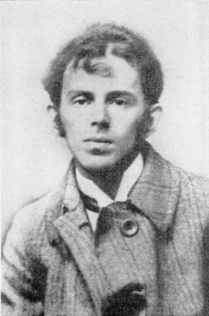
Osip Mandelstam




My reading continues in preparation for my second year MFA seminar course in memoir. I’m on book 9, Hope Against Hope, Nadezhda Mandelstam’s memoir that is less about her than a biographical account of her husband, the great Russian poet, Osip Mandelstam.
Mandelstam, originally of the Russian symbolist school during the latter part of the Silver Age of Poetry (late nineteenth through early twentieth century), came to embrace the clearer language of the Acmeists. He died in a labor camp for the crime of denigrating Stalin in a few lines of verse. Likely, he was already doomed by earlier works critical of a changing Russia. It is ironic Stalin held poetry in such esteem, both as a writer when young, and as a murderer when old. To Stalin, poetry in the wrong hands were ICBMs aimed at his head.
While reading Hope Against Hope, I am in tears most of the time imagining a turn of phrase rewarded with a bullet in the head. The absurdity is almost laughable, Kafkaesque, Bugs Bunny nuts. I’m reminded of science fiction narratives, or dystopian Y.A. I think of shoot-em-up film narratives.
But this story is real. These deaths. And it reminds me of what I, as an American, take for granted.
I have the freedom to blab all day on social media.
I have the freedom to bitch when I feel like it.
I can babble walking down the street about the state of the union.
I can talk on the phone and not have happen to me what happened to Russian poets and millions of others in 1934, 35, 36, 37 and forward another 20 years.
Oration does not equal disappearance in my world. Not yet.
Not so long ago, Americans thought the United States was the greatest country in the world. Job were easy to come by and we got interviewed on the spot, we didn’t have to email a resume! Education didn’t break the bank. The family doctor could swing by the home and his bill wasn’t much. Jobs were plentiful. We didn’t need ten devices to leave messages for people who never got them anyway.
Yes, we’ve lost a lot with the advent of the information age. But as I read this book, I see parallels to the coming of the terror a century ago, the falling away of a more genteel world. The mistaken belief that with hard times comes a responsibility to the masses before the self. The shunning of those who speak or think differently from the populist movements. The fear of speaking out on campuses and at social events if the point of view is different. The ease with which the media can form and sway public opinion, a media that today is indeed made or broken by how well they attract a paying public for their corporate supporters.
Perhaps today a Hitler or Stalin wouldn’t happen here, but the possibility that a tyranny could come from a banking/corporate entity controlling what is allowed to be seen on the internet, controlling the purse strings of our politicians . . . .
Monsanto Corporation is the tip of the iceburg.
First comes terror, then comes death, then comes silence. Then the bees die.
In honor of Osip, I have created the following poem:
Monsanto
119 a share today
And the corn is
Southwestern borer resistant
Armyworm noncompliant
So the bees
Wobble and fall to their knees
The bees knees
So Syngenta as well claims to be
With its bee-killing seeds
And the Almighty proclaims
Fluoridated water
The drought is a deterrent
To organic farming
Pour it on, girls!
He turns on the spout
His garden hose swells
Phallic snake rubbed
He waters his bioengineered grass
And laughs as the pollen drifts
Out of Eden.
The Russian Acmeists


Jun 14, 2014