BOOK REVIEWS





A review by Jill Wisoff
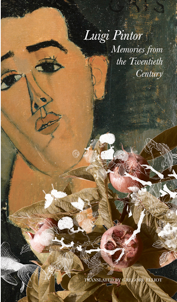
Title: Memories from the Twentieth Century
Author: Luigi Pintor
Translation into English by: Gregory Elliott
Seagull Books
Publishing date May 15, 2013
885 words
Luigi Pintor, a polemical commentator and politician of the Italian left, was a supporter of communist ideology until his passing in 2003. He left behind a body of published work that, until now, was only available in Italian. As a staunch believer in individualism, I was drawn to Pintor's first tome available in English translation, Memories from the Twentieth Century. I wanted to know what made this man tick; this man who valued a political ideology diametrically opposed to mine. So I lifted back the cover and found the volume contained a collection of three of his short books. Each utilizes a different approach to relate and embellish moments of his life. Each reflects on the world's metamorphosis over a lifetime, on birth, on personal loss; on the relevance of Pintor's own closely-held beliefs, formulated in the past, to today's turbulent world.
The first short book is Servabo, a word we're told comes from an inscription on a family crypt that means "to serve." Autobiographical and the most linear of the three narratives, it weakens in translation as the language, at points, comes across as sloppy or obscure. Nevertheless, in the prologue, Pintor writes of his beloved older brother who left his family estate in Sardinia to serve in the war and, within days, died from a landmine. The author muses on a potential life his brother will never know. In the wake of his death, Pintor gave up music and took up the cause of social change as a young partisan during WWII. In later years, he was a dedicated member of the PCI (Italian Communist Party), but was summarily stripped of membership after presenting to them a caustic editorial condemning Russia's crushing occupation of Czechoslovakia. He alludes to this expulsion in the chapter entitled “Exile”:
“I didn't anticipate meeting with hostility from audiences, censorship from the party machine, reproach from my superiors, and the prescribed sanctions. I didn't imagine that the harsh teachers of yesteryear were so protective of themselves, so used to equating themselves with what was truth and right that they had lost the capacity either to teach or to learn.”
Pintor, the prominent Italian journalist Rossanna Rossando, and a few other PCI comrades ousted by the party for expressing similar outrage over Soviet actions, formed a leftist newspaper called Il Manifesto in the late 1960s. Pintor used this publication as the perch upon which he sat to hurl invective down upon the masses and raise leftist consciousness. Il Manifesto continues to maintain a critically regarded reputation of journalistic excellence and leftist support.
The second short book, Miss Kirchgessner, is a more ambitious literary work. The title refers to Marianne Kirchgessner, the acclaimed 18th century German glass harmonica player blinded by smallpox at the age of 4, for whom Mozart composed a quintet. A rumor began in her time that listening to the instrument could drive one mad. As hinted at by this title, the story utilizes metaphor, at moments with startling, perhaps self-conscious Proustian insight, to explore Pintor's impressions of the war, his past, and the resonance of those experiences on his present:
“When war doesn't rouse nations, it thrills individuals, spilling over into the details of existence, nesting under the blankets, stalking the streets of the metropolis. It can be sensed without difficulty in the eyes of people rushing about. It then assumes the chivalric name of competition or the vulgar one of domination, and noisily invades the bread or fish market without requiring the shedding of blood but keeping the desire for it warm.”
The third short book, The Medlar Tree, is a fable about Giano, a one-hundred year old man, who sits under a tree and contemplates his life. Chapters are titled with progressing months over two-and-a-half calendar years. The device, of course, is used to further reflect Pintor's somewhat chimerical political and world views from the vantage point of aged wisdom:
“No one is more reactionary than a penitent revolutionary, than a worker who becomes a little boss, than someone who gets a taste of privilege after having suffered hardship. He changes himself completely––every gesture, not just his tie.”
Truth to tell, I expected pedantic persuasion, perhaps veiled or manifest demagoguery of Pintor's political beliefs in these three works. Rather, Memories from the Twentieth Century offers quiet, insightful commentary from a man who cast away his aristocratic Sardinian heritage and entitlement to advocate for those not born into privilege, his decision to do so precipitated by a brother's death and a war. Perhaps, at the end of his life, he discovered meaninglessness in his chosen path when he lost a son and daughter in quick succession and faced a certain mortality. Whether he did or not remains elusive and contradictory in these pages, but what is clear was his compassion toward those without a voice: the poor, the defenseless, the anonymous young denied a future. And when he stood up to speak out against Russian wrongdoing, when he opposed fascism, he did so with bravery and a strong heart that transcended man-made ideologies and political parties. He did so selflessly, knowing in so doing he would risk achieving his own ambitions, or risk his life. He was a man I could understand, a man all people of good conscience recognize despite our political differences: a man of righteousness.
MEMORIES FROM THE TWENTIETH CENTURY: LUIGI PINTOR
Feb 4, 2014